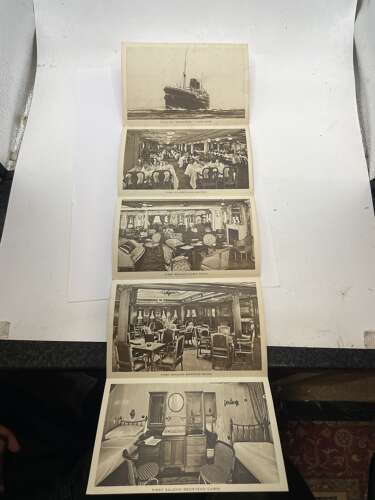
WW2 Peninsular & Oriental Steam Navigation Co Sunk SS Rawalpindi Letter Card
Code: 27577
(1 in stock)
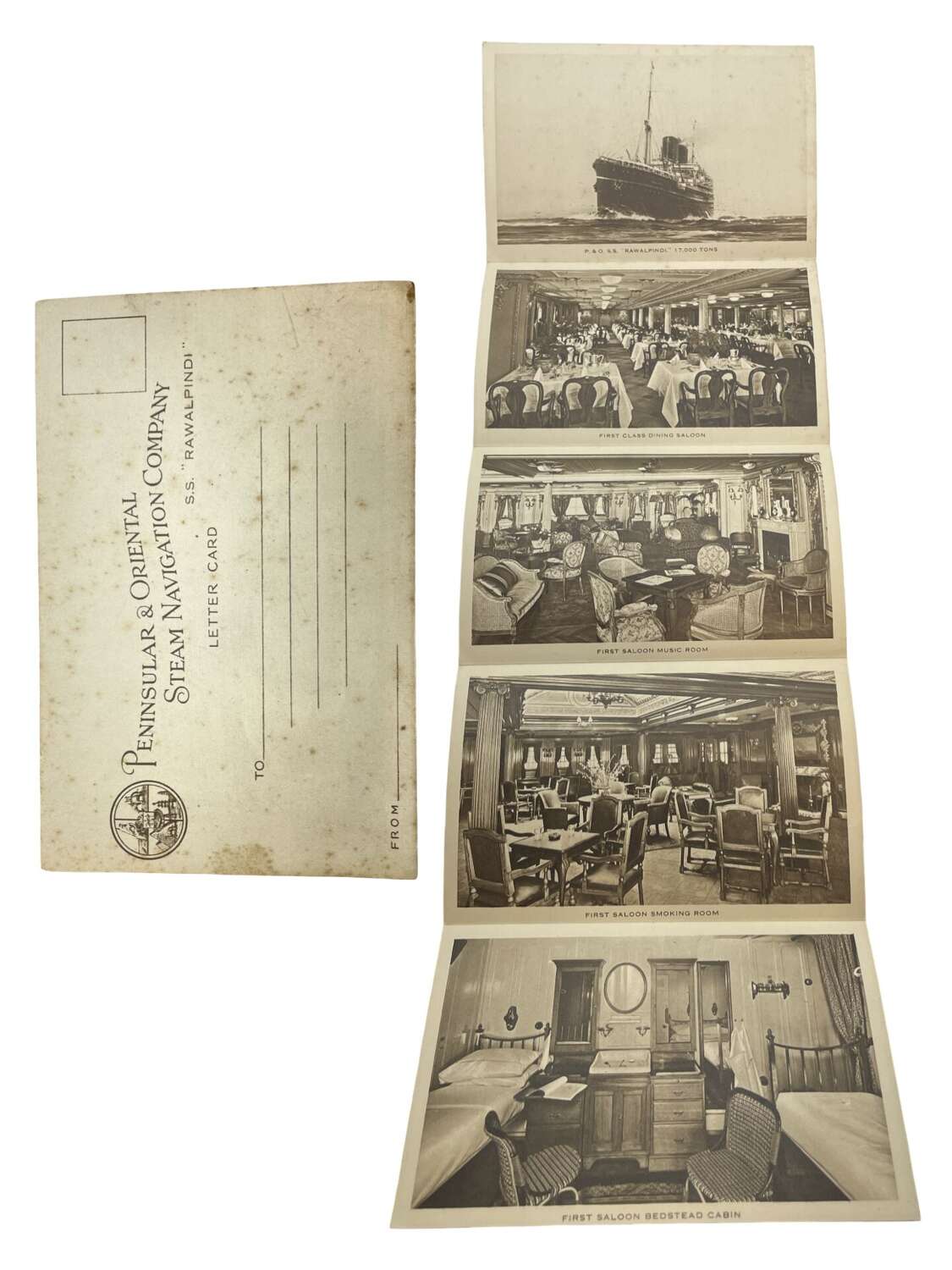
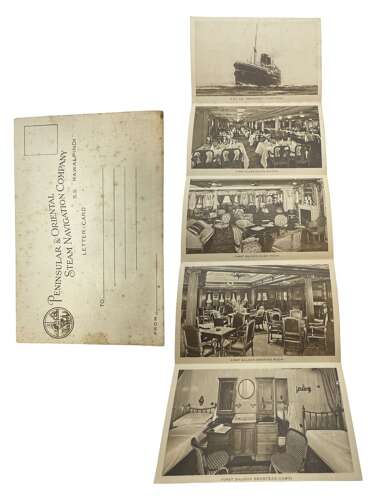
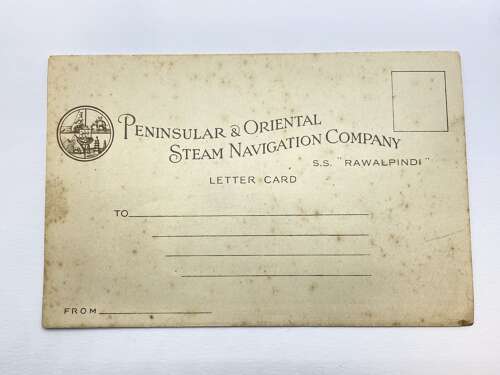
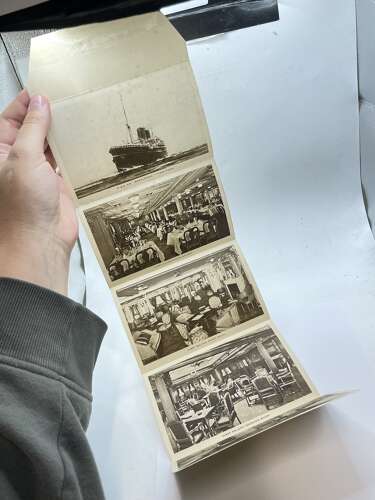
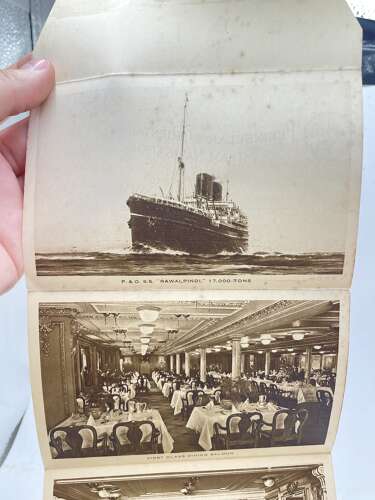
For sale is a WW2 Peninsular & Oriental Steam Navigation Co Sunk SS Rawalpindi Letter Card.
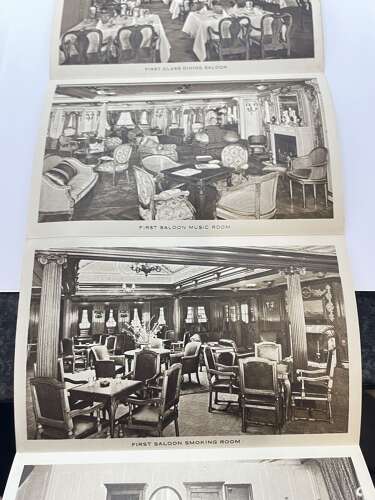
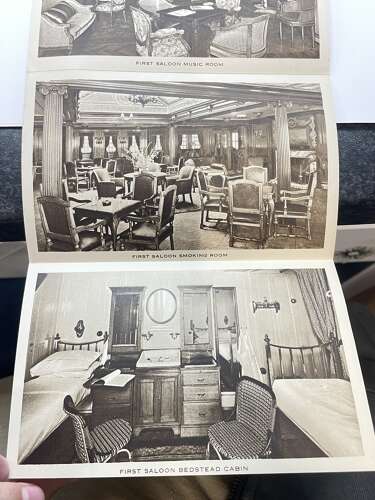
Inside the letter card shows 5 photographs of SS Rawalpindi including views of the outside of the ship, first class dining saloon, first saloon music room, first saloon smoking room, first saloon bedstead cabin. This letter card is in excellent condition, with the original gum still present.
This letter card was produced when SS Rawalpindi was still under Peninsular & Oriental Steam Navigation Company. She was Requisitioned in 1939 by admiralty.
HMS Rawalpindi was a British armed merchant cruiser (a converted ocean liner employed as a convoy escort, as a patrol vessel, or to enforce a blockade) that was sunk in a surface action against the German battleships Scharnhorst and Gneisenau during the first months of the Second World War. Her captain was Edward Kennedy.
While patrolling north of the Faroe Islands on 23 November 1939, she was detected at 16:07 by the German battleship Scharnhorst who was assigned together with her sister ship Gneisenau to attack the Northern Patrol. The German ship closed in on Rawalpindi and half an hour later signalled several times 'Stop! What ship?'. Rawalpindi answered with the signal 'F-A-M', altered course and started to lay smoke.
Despite being hopelessly outgunned, 60-year-old Captain Edward Kennedy RN of Rawalpindi decided to fight. He was heard to say "We'll fight them both, they'll sink us, and that will be that. Good-bye".
At 17:03 Scharnhorst opened fire at a distance of 7.5 kilometers, and Rawalpindi immediately returned fire. Three minutes later Rawalpindi was hit and started to burn fiercely. Rawalpindi managed to score one hit on the aft deck of Scharnhorst, which caused minor splinter damage. At 17:11 Gneisenau joined the fight and opened fire, but five minutes later the German commander ordered to cease fire as Rawalpindi signaled 'Please send boats'. Both German ships started to pick up survivors but at 19:15 German lookouts spotted another ship in the darkness and gave alarm. The German ships retreated northwards as the British cruiser Newcastle arrived on the scene. During the battle Rawalpindi managed to broadcast two signals to the British admiralty. The first signal mentioned she had sighted a battlecruiser, the second mentioned she was attacked by the heavy cruiser Deutschland.
238 men died on Rawalpindi, including Captain Kennedy. Thirty-seven men were rescued by the German ships; a further 11 were picked up by HMS Chitral (another converted passenger ship) 36 hours later. Captain Kennedy—the father of naval officer, broadcaster and author Ludovic Kennedy—was posthumously Mentioned in Dispatches. Crew members on Scharnhorst and Gneisenau were eligible for the High Seas Fleet Badge for participating in the sinking of Rawalpindi.
British naval forces mobilised to cut off the route for the German force back to Germany. Admiral Forbes with two battleships a heavy cruiser and the 8th Destroyer Flotilla departed the Clyde for a position off the Norwegian coast to intercept the German ships, still believed to be Deutschland, as they returned to Germany. The heavy seas forced some of the destroyers back to port. Two light cruisers and five destroyers were sent from Rosyth to the Fair Island Channel. Five light cruisers took station near North Rona to cover approaches to the Fair Island Channel. Two more light cruisers were to act as "a night attack striking force." Further cruisers and destroyers were assembled by calling off hunts for other German ships and recalling a convoy. Battleships,an aircraft carrier and heavy cruisers were redeployed. A combined British and French force around the battlecruisers Hood and Dunkerque assembled from Plymouth and Brest ; it swept the Altantic for German battleships until November.
This will be sent via Royal Mail tracked 24 and dispatched within two working days.
